Why workplace accessibility is the cheapest RSE blind spot in NZ offices
Most New Zealand companies now track emissions, gender balance and community hours. Yet the physical and digital workplace accessibility of each NZ office almost never appears in the RSE report, even though it shapes daily work for disabled employees and candidates. That gap quietly undermines every slide about inclusion, because people with disabilities read the workplace itself before they read the policy.
For an office manager, this is not an abstract human resources debate. It is a concrete facilities, procurement and governance problem that sits between your current workplace layout, your landlords and your health wellbeing obligations under WorkSafe guidance. When you treat accessibility as a recurring operational standard rather than a one off project, you create inclusive workplaces that are cheaper to maintain than to retrofit in a panic after a complaint.
Think about your last fit out in Auckland, Wellington or Christchurch. You probably spent more on acoustic panels and feature lighting than on accessibility features that would make the office accessible for wheelchair users, neurodivergent staff and people with sensory disabilities. Yet a single blocked ramp or inaccessible bathroom can exclude disabled people from entire floors, while a few ergonomic chairs and adjustable desks can quietly support dozens of employees with back issues or chronic pain.
Accessibility in a New Zealand workplace is not just about a compliant ramp at reception. It is about whether a wheelchair user can reach the meeting room where decisions are made, whether the accessible office bathroom actually has space for a support person, and whether your fire evacuation plan assumes that disabled people can use stairs. When you audit these environments properly, you see how many individual barriers exist between people and meaningful work.
Office managers often underestimate how much recruitment and retention depend on an accessible workplace. In a tight talent market, people with disabilities will choose the employer whose office spaces, tools and routines clearly support disability inclusion over the one with a glossy diversity page. That is why workplace accessibility in each NZ office is both an inclusion obligation and a competitive edge for employers who want to attract experienced disabled employees and keep them.
There is also a governance angle that RSE committees rarely quantify. Every inaccessible corridor, heavy door or poorly designed kitchen is a latent compliance risk under the Human Rights Act and the Health and Safety at Work Act, and it also erodes trust between employers and staff. When you create inclusive environments that respect access needs, you reduce grievances, lower churn and strengthen the social licence story you tell to boards and investors.
Cost is the usual objection, but it does not survive a line by line look at your capital expenditure. Most accessibility features in an existing office are process changes, not structural rebuilds, and they cost less than one percent of a typical CBD fit out. The real expense comes from ignoring disabled people until a legal or reputational crisis forces a rushed, suboptimal response that still leaves the workplace only partially accessible.
For New Zealand office managers, the thesis is simple. Workplace accessibility in every NZ office should be treated as a standing operational KPI, reviewed with the same discipline as fire drills and security passes, and reported in the RSE section with specific metrics. If you do that, you move disability inclusion from a paragraph in the policy manual into the lived experience of people who use your spaces every day.
Physical environments: the meeting room a wheelchair cannot reach
Walk your building in Auckland or Wellington with a wheelchair user, not with a checklist. You will notice that the supposedly accessible office entrance has a heavy manual door, the lift lobby has no turning circle for wheelchair users, and the most important meeting room sits up two steps with no ramp. That is the difference between a compliant drawing and an accessible workplace that actually works for disabled people.
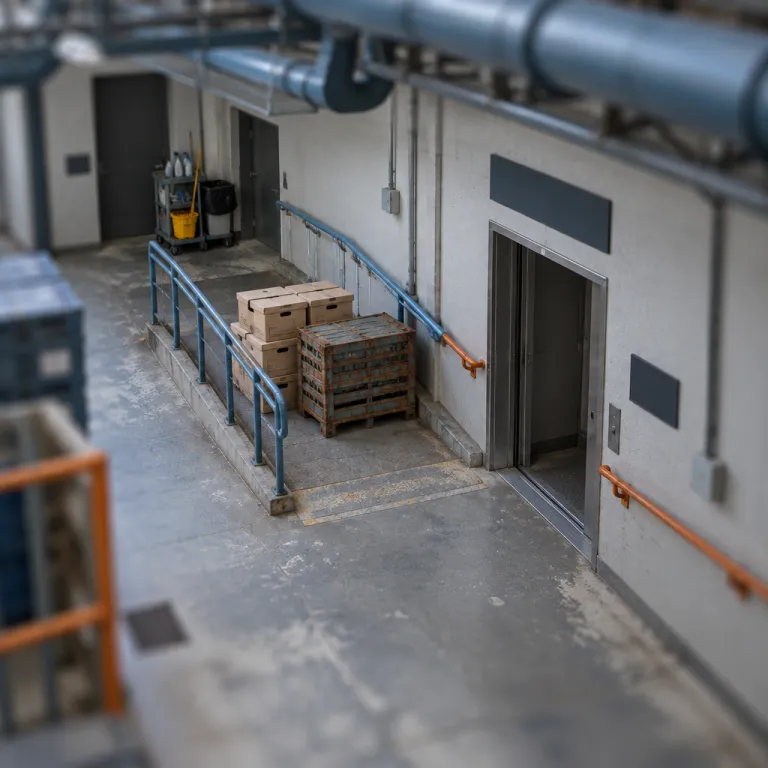
Physical workplace accessibility in a NZ office starts at the street edge. Is there clear wayfinding from public transport, is the intercom at a reachable height, and can people with disabilities safely cross the loading bay without dodging courier vans. These are mundane facilities questions, but they decide whether disabled employees arrive at work already exhausted by the building before they even open their laptop.
Inside the office, design decisions either create inclusive environments or quietly exclude people. Desks crammed into narrow spaces make it impossible for a wheelchair to pass, while hot desking without reserved accessible stations forces disabled employees to negotiate for access every morning. When you specify ergonomic chairs, adjustable desks and lever handles as standard, you support a wide range of disabilities without needing to label anyone as an exception.
Bathrooms are where many New Zealand offices fail the most basic accessibility test. The accessible stall often doubles as a storage room, the door closer is too strong for some people with limited upper body strength, and there is no emergency call button that connects to a staffed reception. If disabled people cannot use the bathroom independently, the workplace is not an inclusive workplace, regardless of how many posters about diversity hang in the kitchen.
Meeting rooms deserve a separate audit, because this is where power lives. If the boardroom or leadership project space is not accessible for wheelchair users, then disability employers are literally making decisions in rooms that some disabled employees cannot enter. A simple rule helps create inclusive decision making spaces ; every room used for governance or promotion discussions must be fully accessible inclusive of mobility, hearing and vision needs.
Do not forget circulation and emergency routes. Corridors narrowed by plants or storage boxes can block access for people with mobility disabilities, and evacuation chairs that no one has been trained to use are a false comfort. WorkSafe expects employers to ensure that all employees, including disabled people, can evacuate safely, which means practising with real individuals rather than assuming generic procedures will work.
Procurement is where office managers can quietly shift the baseline. When you renegotiate leases or fit out contracts, bake accessibility features into the specification alongside energy efficiency and cost per square metre, and treat them as non negotiable. The same disciplined approach you would use for a structured procurement strategy in another complex category, such as the social media supply chain described in this analysis of a procurement strategy for New Zealand companies, should apply to every physical accessibility decision.
Finally, remember that physical accessibility is not a one time capital project. As teams grow, furniture moves and new tenants share floors, the current workplace can drift from accessible to hostile without anyone signing a formal change request. Your role is to support continuous review, walking the spaces with disabled employees twice a year and updating the RSE report when you close real gaps rather than when you install a symbolic ramp.
Digital, sensory and privacy: the invisible half of accessibility
Most RSE reports in New Zealand mention flexible work and mental health support, but they rarely mention whether the digital workplace is accessible for screen readers or whether all hands recordings have captions. That omission matters, because a beautifully accessible office is useless if disabled employees cannot access the intranet, HR portal or payroll system. Digital accessibility is now as central to disability inclusion as ramps and lifts.
Start with the tools that employees use every day. Are your PDFs tagged properly for screen readers, do your learning modules include captions and transcripts, and can people with disabilities navigate the HRIS without a mouse. If the answer is no, then your accessible workplace narrative is incomplete, because work now happens as much in software as in physical spaces.
All hands meetings and town halls are another blind spot. When you record sessions for remote employees, do you provide accurate captions, high contrast slides and a microphone policy that avoids overlapping voices. Without these accessibility features, people with hearing or processing disabilities are effectively excluded from the cultural centre of the workplace, even if they are technically present in the room or on the call.
Sensory environments deserve the same operational discipline as fire safety. Open plan offices with harsh lighting, constant noise and no quiet rooms can be brutal for neurodivergent employees or people with anxiety, even if the layout is technically accessible for wheelchair users. A small investment in quiet spaces, adjustable lighting and clear norms about focus time can transform health wellbeing outcomes for a significant minority of employees.
Privacy is where accessibility and governance intersect. When you collect information about disability or adjustments, your privacy notice must clearly explain how that data will be used, who can access it and how long it will be retained, or people will simply not disclose their needs. This is not just a legal requirement under the Privacy Act ; it is a trust requirement if you want disabled employees to feel safe asking for support.
Consent processes also matter. If you are recording accessibility needs during onboarding or in surveys, the same discipline that New Zealand companies apply to social media consent, as outlined in this discussion of consent forms and privacy governance, should apply to disability data. Clear options, explicit purposes and easy withdrawal of consent are non negotiable if you want an inclusive workplace where people with disabilities trust the system.
Office managers often underestimate how much of their role now sits in digital procurement. When you choose room booking systems, visitor management tools or learning platforms, you should treat accessibility features as mandatory evaluation criteria, not as nice to have extras. Ask vendors for their accessibility statements, test with a screen reader and involve disabled people in pilots before you sign multi year contracts.
Finally, remember that digital and sensory accessibility are not just for disabled people. Captions help people in noisy environments, quiet rooms help anyone doing deep work, and clear privacy notice language helps every employee understand their rights. When you create inclusive digital and sensory environments, you raise the floor for everyone, not just for those who identify as disabled.
How to run the accessibility audit that deserves a line in the RSE report
If you want workplace accessibility in your NZ office to appear in the RSE report, you need an audit that goes beyond a compliance checklist. The most effective audits in New Zealand companies start with lived experience, pairing office managers with disabled employees, wheelchair users and people with sensory disabilities for a structured walk through. That approach exposes barriers that no generic template from an overseas consultancy will ever catch.
Begin with a simple principle ; nothing about disabled people without disabled people in the room. Invite volunteers from your disability employee network, or if you do not have one, work with external disability employers organisations that can provide trained auditors. Their role is to show you how the current workplace feels from the perspective of an individual who has to navigate it every day, not to shame you for past decisions.
Structure the audit into four passes. First, review physical access from street to desk, including entrances, lifts, bathrooms, kitchens and emergency routes, and document every barrier to an accessible office experience. Second, review digital tools, from intranet to visitor kiosks, checking whether people with disabilities can complete core tasks without assistance.
Third, assess sensory environments. Walk through open plan areas, quiet rooms and meeting spaces at different times of day, noting noise levels, lighting, smells and crowding that might affect health wellbeing for neurodivergent employees or people with anxiety. Fourth, review policies, privacy notice language and onboarding materials to ensure they explain how to request adjustments and how disability information is handled.
Quantification is what earns accessibility its place in the RSE narrative. Count how many meeting rooms are fully accessible, how many ergonomic chairs are available per ten employees, how many digital tools meet basic accessibility standards, and how many disabled employees report having the adjustments they need. These numbers can sit alongside carbon intensity and gender ratios, turning disability inclusion from a story into a measurable commitment.
Reporting should be brutally honest. If only half your office spaces are accessible inclusive of mobility needs, say so, and publish a plan with dates and budgets to create inclusive environments across the rest of the portfolio. Investors and employees are far more likely to trust an employer who names the gap than one who hides behind vague language about inclusive workplaces.
From a cost perspective, you can frame accessibility as operational efficiency rather than charity. Many adjustments, such as better task lighting, clearer signage or more ergonomic chairs, reduce injuries, absenteeism and churn, which directly improves ROI on your fit out, as argued in this analysis of sustainable office ROI for New Zealand businesses. When the CFO sees that accessibility upgrades often pay for themselves through reduced risk and higher productivity, the budget conversation changes.
The final step is governance. Build accessibility metrics into your regular facilities and people dashboards, assign clear owners for each action, and review progress quarterly with the same seriousness you apply to safety incidents or payroll accuracy. In the end, the real test of disability inclusion in a New Zealand workplace is not the policy PDF, but the Monday morning queue at reception.
Key figures on accessibility and disability inclusion in workplaces
- According to Stats NZ, disabled people in New Zealand have an employment rate around 25 percentage points lower than non disabled people, highlighting a persistent participation gap that workplace accessibility improvements can help address.
- Research from the New Zealand Human Rights Commission has shown that relatively low cost adjustments, such as ergonomic chairs, flexible hours and accessible technology, resolve most workplace barriers for disabled employees, with many changes costing under 500 NZD per person.
- WorkSafe New Zealand guidance indicates that employers who proactively address accessibility and health wellbeing factors, including safe access routes and appropriate equipment, experience fewer injury claims and lower absenteeism, which directly reduces operational costs.
- International studies cited by the International Labour Organization report that companies with strong disability inclusion practices are more likely to outperform their peers on profitability and productivity metrics, suggesting that accessible workplaces are correlated with better overall business performance.
- Surveys by the Office for Disability Issues have found that many people with disabilities still encounter physical and digital barriers in public and private buildings, reinforcing the need for systematic accessibility audits in New Zealand offices.