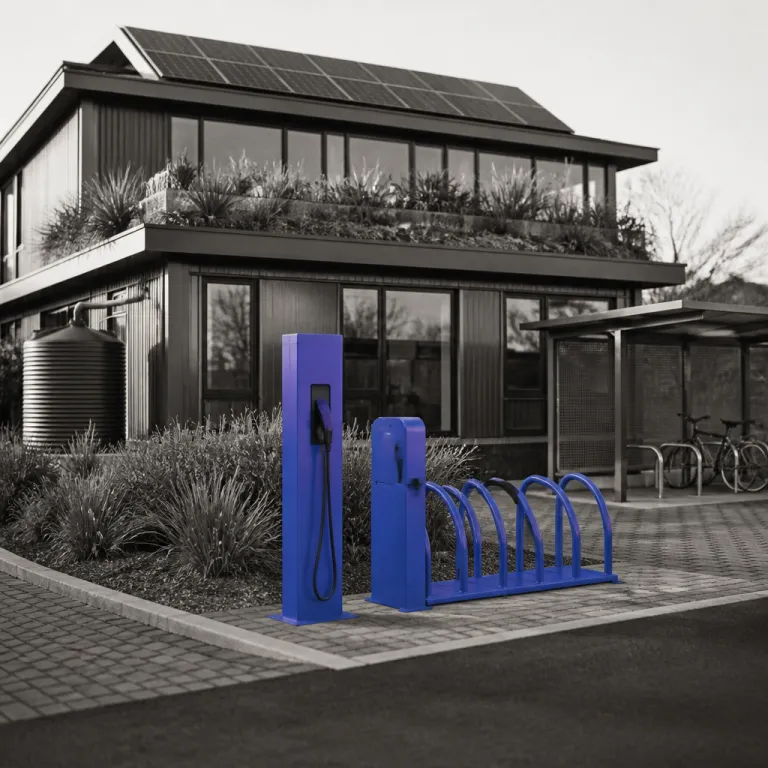
The two-step stall in the carbon-neutral office NZ journey
Most New Zealand offices can handle the first wave of visible climate action. Once the recycling stations, LED lighting and branded keep cups arrive, leadership often feels the carbon neutrality box for the business has been ticked. Then the hard work of measuring real carbon emissions, setting reduction targets and changing procurement quietly slips down the agenda.
For an operations lead running a carbon neutral office NZ project, this two step stall is predictable and dangerous. Step one focuses on symbolic gestures that look good in a climate statement but barely shift the net carbon profile of the building or the wider environment. Step two demands a quantified view of greenhouse gas data, a credible emissions reduction plan and a willingness to reduce carbon even when it disrupts long standing supplier relationships.
In most mid sized organisations across Aotearoa New Zealand, the office itself produces limited direct emissions. Scope 1, which covers on site fuel use, is often minimal in a typical commercial building that relies on grid electricity and shared services. The real climate change impact sits in Scope 2 electricity use and Scope 3 carbon emissions from travel, commuting, purchased goods and outsourced services that keep the office running.
That is why a serious carbon reduction agenda for any New Zealand office must start with measurement, not marketing. You cannot manage a carbon footprint you have never quantified, and you cannot claim carbon neutrality while ignoring the emissions embedded in your technology stack, catering contracts and cleaning services. A carbon neutral pledge without a transparent report and a dated reduction plan is not a neutral standard, it is a reputational risk.
Office managers feel this tension every time a new climate statement is drafted for the website. The neutral language of aspiration often masks the absence of a concrete government programme style framework, clear requirements or any binding reduction targets. Staff are increasingly literate about climate change, and they can tell when a business is serious about low carbon operations versus when it is simply chasing international optics.
New Zealand’s public sector has already been pushed further by neutral government expectations and emissions reduction directives. While many private offices are not yet captured by mandatory climate related disclosures, they operate in the same country, under the same climate change pressures and with the same energy and environment constraints. The gap between public sector practice and mid market business reality is where most carbon neutral office NZ ambitions currently stall.
For a 200 person office in Auckland or Wellington, the question is not whether climate change is real. The question is whether leadership will back the operations équipe to build a structured government programme style roadmap for emissions reduction, or keep carbon neutrality parked as a marketing talking point. That choice will determine whether your next climate statement reads like governance, or like greenwash.
What step two really means for a 50–200 person New Zealand office
Step two in the carbon neutral office NZ journey is not a slogan, it is a measurement discipline. For a 50 to 200 person business in New Zealand, that discipline starts with a basic greenhouse gas inventory aligned with recognised international practice such as the Greenhouse Gas Protocol. You map energy use, travel patterns, supplier spend and waste streams, then translate those activities into quantified carbon emissions for the whole building and its operations.
Most offices underestimate how much of their net carbon profile sits outside the electricity meter. Scope 2 emissions from grid energy are visible on the monthly bill, but Scope 3 emissions from staff flights, rideshare use, food catering and outsourced IT services often dominate the carbon footprint. Without this full picture, any reduction plan will over focus on lighting upgrades and underweight the procurement and travel policies that actually move the dial.
In practice, your first serious emissions reduction plan should be short, dated and operational. Start with a one year horizon, set two or three measurable reduction targets and assign clear business owners for each action. For example, you might commit to reduce carbon from domestic air travel by a set percentage, cut office waste to landfill by half and shift a defined share of spend to low carbon suppliers.
To make this concrete, imagine a 200 person Auckland office with typical hybrid working patterns. A simple baseline inventory might show around 120–180 tCO2e a year from purchased electricity, 80–150 tCO2e from staff flights and business travel, 40–70 tCO2e from commuting, and 20–40 tCO2e from waste, catering and office consumables. These ranges are indicative only, based on common emission factors used in New Zealand greenhouse gas inventories and typical office activity data, but even with rough figures leadership can see that travel and procurement policies often matter as much as the power bill.
Waste is usually the easiest operational entry point for an office manager who wants tangible climate action. A structured waste audit (whether using an internal resource or an external provider) will show exactly what your office sends to landfill, which materials dominate and where behaviour or procurement changes can reduce emissions. That data becomes part of your broader climate change report and feeds directly into your carbon reduction roadmap.
Energy is the next lever, and it is bigger than switching to LED bulbs. Work with your landlord or facilities provider to understand the building’s base energy profile, then use EECA guidance on commercial building performance to identify realistic efficiency upgrades and behaviour changes. EECA has reported that commercial buildings account for roughly 20 percent of New Zealand’s electricity use, which confirms that office energy efficiency is a material lever for any carbon neutral office NZ plan.
Travel and commuting policies are where many New Zealand offices quietly avoid hard decisions. A credible carbon neutral strategy will cap or price high emissions travel, incentivise low carbon commuting and make virtual meetings the default for inter city collaboration. You do not need a neutral government directive to set these rules, you need leadership willing to back the operations team when frequent flyers push back.
Finally, embed these changes into procurement so they survive staff turnover and budget cycles. Add climate and environment criteria to every major contract, from cleaning and catering to cloud services and office fit out, and require suppliers to report their own carbon emissions and reduction targets. Over time, this shifts your net carbon exposure from ad hoc initiatives to a stable part of how the business buys, builds and operates.
Governance, greenwash and the mid-market credibility gap
The most fragile part of any carbon neutral office NZ initiative is not the data, it is the governance. Mid market businesses in New Zealand sit in an awkward space, too small for mandatory climate related disclosures yet too visible to ignore client and talent expectations. That is where vague climate statements, unverified carbon neutrality claims and quietly abandoned reduction targets tend to accumulate.
Greenwash in this context rarely comes from malice, it comes from weak process. A leadership team signs a carbon neutral pledge, the marketing équipe drafts a climate statement referencing international goals and the office manager is left to improvise a reduction plan without budget or authority. When the next tender asks for evidence of emissions reduction or a formal report, the gap between rhetoric and reality becomes obvious.
To avoid this, treat carbon and climate governance like any other compliance domain. Assign a senior owner, define clear requirements, set review cadences and integrate climate action into risk registers and board reporting. If your business would never fudge a financial report, it should not make unverifiable claims about net carbon status or carbon neutrality either.
Certification can help, but only if you respect its limits. Many New Zealand offices look to Toitū Envirocare because its carbon certification programme is tailored to local regulation, grid emissions factors and sector norms. Toitū Envirocare reports that hundreds of New Zealand organisations now participate in its carbon certification pathway, which signals that verified greenhouse gas reporting and independently checked neutrality have become mainstream credibility markers rather than niche extras.
Data governance extends to how you handle physical records and confidential waste. A robust secure document disposal process, whether managed in house or via an internal resource, reduces risk while also allowing you to track and report the emissions impact of paper use and shredding. When you can show both security compliance and emissions reduction from smarter document management, your climate action narrative becomes operational rather than cosmetic.
Talent expectations are another quiet driver of climate action in New Zealand offices. Recruitment data from platforms such as SEEK NZ indicates that sustainability values influence where younger employees choose to work, and they can distinguish between low carbon operations and high gloss marketing. Research cited by Europlan NZ similarly suggests that sustainable office choices are increasingly viewed by New Zealand businesses as both environmentally responsible and financially smart, reinforcing the business case for low carbon building upgrades and energy reduction initiatives.
Finally, remember that clients and investors now read climate statements the way they read financial notes. They look for quantified carbon emissions, time bound reduction targets, references to recognised government programme frameworks and evidence of independent verification. In this environment, the fastest way to erode trust is not to have no climate action plan, but to publish one that collapses under basic due diligence.
From pledge to playbook: a practical carbon action system for NZ offices
If you want your carbon neutral office NZ pledge to survive the next budget round, you need a playbook, not a poster. That playbook should translate climate change goals into repeatable office management routines that fit the realities of New Zealand’s energy system, property market and regulatory environment. Think of it as a governance system for carbon emissions, not a side project for the keenest person in the team.
Start by mapping your office operations against the three standard scopes of greenhouse gas accounting. Scope 1 covers direct fuel use, which is often limited in a typical New Zealand office building, Scope 2 covers purchased electricity and Scope 3 covers everything else in your value chain, from staff commuting and flights to software subscriptions and outsourced services. This simple structure turns an abstract climate action ambition into a concrete checklist for data collection and emissions reduction.
Next, define a three year reduction plan with annual checkpoints rather than a distant net carbon aspiration. Year one focuses on measurement, quick wins and governance, year two on procurement shifts and travel policies, and year three on deeper building and energy interventions negotiated with landlords or property managers. Each year should end with a short internal report that tracks carbon footprint trends, highlights emissions reduction achievements and resets targets.
To make this more tangible, imagine a simple three year roadmap for a 100 person Wellington office. In year one, the team completes a greenhouse gas inventory, runs a waste audit, sets a domestic air travel reduction target and publishes a short internal climate report. In year two, they embed emissions criteria into all new supplier contracts, introduce low carbon commuting incentives and pilot sub metering with the landlord. By year three, they renegotiate the lease to include energy performance clauses, invest in building efficiency upgrades and seek external verification of their carbon neutral office NZ status.
External frameworks can anchor this work and prevent drift. EECA resources on commercial building energy use help you benchmark office performance in the New Zealand context, while Toitū Envirocare offers a structured government programme style pathway from measurement to certified carbon neutrality. Local council initiatives in Auckland and Wellington often provide grants or advisory support for low carbon transport, waste reduction and sustainable building upgrades.
Do not ignore the social side of this transition, especially in multi site organisations. Aligning your carbon and CSR agenda with people operations can unlock new opportunities for office managers to lead cross functional climate projects, from commute incentive schemes to supplier diversity programmes that also reduce emissions. When staff see that climate action shapes real decisions about travel, catering and workspace design, engagement rises and behaviour change sticks.
Finally, treat your climate statement as the last step, not the first. Once you have measured carbon emissions, implemented reduction targets, engaged with recognised neutral standard frameworks and embedded climate action into procurement and facilities governance, then you can talk credibly about carbon neutrality. The real test of a carbon neutral office NZ is not the elegance of the pledge, but whether it changes how your équipe runs the Monday morning queue at reception.
Key figures shaping the carbon-neutral office agenda in New Zealand
- EECA has reported that commercial buildings account for roughly 20 percent of New Zealand’s electricity use, which means office energy efficiency is a major lever for national emissions reduction and a practical focus area for any carbon neutral office NZ roadmap.
- Toitū Envirocare’s carbon certification programme is used by hundreds of New Zealand organisations across sectors, signalling that verified carbon neutrality and structured greenhouse gas reporting have become mainstream credibility markers in the local business environment.
- New Zealand’s Climate-Related Disclosures regime currently applies to large listed issuers, banks and insurers, but its existence is creating voluntary pressure on mid market companies to improve climate reporting and align with emerging international expectations.
- Research cited by Europlan NZ indicates that sustainable office choices are increasingly viewed by New Zealand businesses as both environmentally responsible and financially smart, reinforcing the business case for low carbon building upgrades and energy reduction initiatives.
- Recruitment insights from SEEK NZ show that a significant share of younger job seekers consider an employer’s stance on climate change and carbon neutrality when choosing roles, making credible climate action a factor in talent attraction and retention.