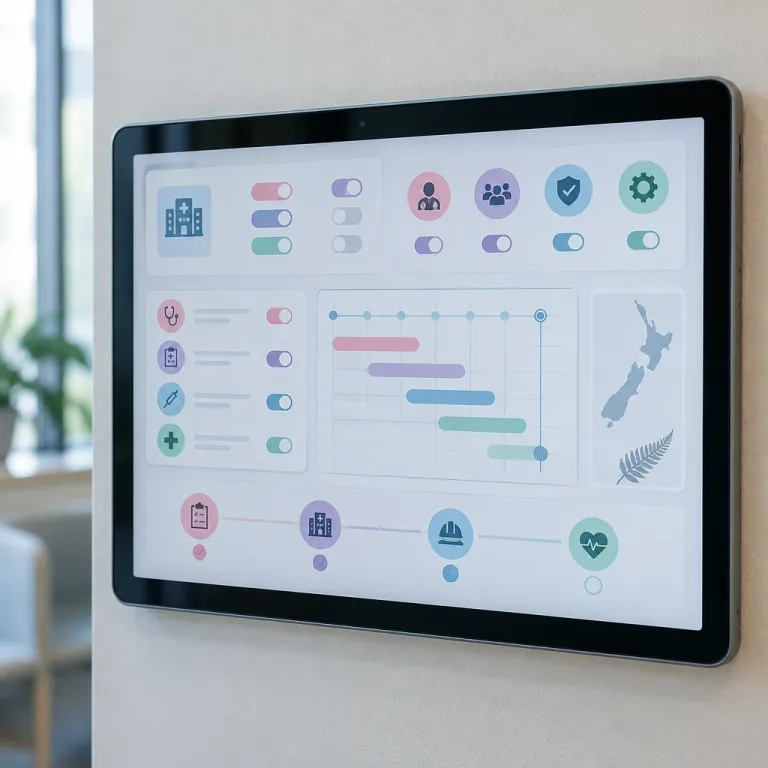
Why healthcare project manager settings matter for New Zealand office managers
Office managers in New Zealand healthcare organizations sit at the crossroads of clinical priorities and administrative pressure. The way you configure healthcare project manager settings directly shapes how each initiative supports patient care while staying inside the Privacy Act 2020 and the Health Information Privacy Code 2020 issued by the Office of the Privacy Commissioner. When these settings are aligned with your organization strategy, projects involve less rework, fewer delays, and more predictable outcomes.
In many New Zealand healthcare organizations, the office manager quietly becomes the anchor for project management because clinical teams lack time for detailed coordination. You translate executive goals into concrete tasks, assign the right resource to each project, and keep communication flowing between administrative teams and clinical leaders. Done well, this management healthcare role turns scattered projects into a coherent portfolio that supports both financial stability and safer patient care.
Healthcare projects often cut across departments, from reception and billing to clinical services and IT, so fragmented project management settings quickly create confusion. Poorly defined project roles or unclear software permissions can leave team members duplicating tasks or missing critical risk management steps. By contrast, carefully tuned healthcare project manager settings help every team understand responsibilities in real time and keep the organization compliant, efficient, and aligned with local health information rules.
Structuring projects and portfolios in healthcare organizations
Before adjusting any healthcare project manager settings, you need a clear structure for each project and for the wider portfolio. Start by defining which healthcare projects are strategic, which are operational, and which are regulatory, then map them into a simple portfolio management view. This structure lets you compare the pros and cons of competing initiatives and decide where limited resource and time should go first.
For example, a New Zealand primary care organization might run a healthcare project to implement a new electronic health record (EHR) platform such as Medtech Evolution or Indici while also upgrading clinical equipment and redesigning patient intake forms. Each of these projects involve different teams, different risk management profiles, and different compliance requirements, yet they all draw on the same administrative teams and budgets. A portfolio management dashboard in your project management software helps you see these dependencies and adjust project timelines before bottlenecks hit patient care.
Office managers who already oversee finance or staff accounting can reuse those analytical skills when structuring healthcare projects. If you are familiar with the responsibilities described in a detailed staff accountant job description, you can apply similar discipline to tracking project costs and benefits across the portfolio. A clear structure for projects and portfolios also makes it easier to explain to senior leaders why some projects involve more resource management effort and why others must pause to protect privacy compliance and patient outcomes.
Understanding the staff accountant role in New Zealand companies can provide a useful benchmark for how rigorously you should document financial and operational aspects of healthcare project portfolios.
Configuring project management software for clinical and administrative teams
The core of effective healthcare project manager settings lies in how you configure your management software for both clinical and administrative teams. Start with role based access so that each team member only sees the project tasks, patient related information, and tools they genuinely need. This approach supports obligations under the Health Information Privacy Code while keeping project management screens clean and focused for busy staff.
In many New Zealand healthcare organizations, EHR systems, scheduling tools, and project management software operate in silos, which slows communication and increases manual work. Where possible, work with IT to integrate these tools so that project data updates in real time when clinical workflows change, such as new patient care pathways or altered clinic hours. A simple integration workflow might send daily appointment data from your practice management system into the project tool, automatically updating tasks for patient communication, room preparation, and follow up documentation. When projects involve both clinical and administrative teams, shared dashboards reduce misunderstandings about deadlines, ownership, and compliance checkpoints.
Office managers should also configure templates inside the management software for recurring healthcare projects, such as EHR systems upgrades, policy reviews, or new clinic openings. Standard templates that predefine tasks, risk management steps, and privacy compliance checks help team members move faster without skipping critical details. If your role overlaps with an office coordinator position, you can align these templates with the coordination duties described in a typical New Zealand office coordinator position description so that project and daily operations reinforce each other.
Key responsibilities of office coordinators in New Zealand companies can guide how you assign communication and follow up tasks within healthcare project templates.
Designing communication flows and team settings that protect patient care
Communication settings inside your project management software are just as important as task lists for protecting patient care. Configure channels so that clinical teams, administrative teams, and external partners each have dedicated spaces, while sensitive patient information stays restricted to appropriate healthcare professionals. This separation reduces the risk that projects involve unnecessary exposure of patient data and supports ongoing compliance with the Privacy Act 2020 and the Health Information Privacy Code.
For cross functional healthcare projects, define how and when team members should escalate issues, such as delays in clinical resource availability or unexpected software outages. Real time alerts for high priority tasks help the project manager and the wider team respond quickly when risks threaten patient care or regulatory compliance. To make this practical, create a short escalation checklist that covers who to notify, how quickly to respond, and where to document decisions so that communication remains consistent across projects.
Office managers in New Zealand often coordinate rosters, room bookings, and supplier communication, so you already understand how misaligned messages can disrupt an organization. Apply the same discipline to healthcare project communication by setting expectations for response time, documentation standards, and meeting cadence. When healthcare organizations treat communication as a structured part of project management, not an afterthought, projects involve fewer surprises and more consistent outcomes for both staff and patients.
Aligning resource management, timeframes, and risk controls in healthcare projects
Resource management is where many healthcare project manager settings either support or undermine delivery in New Zealand companies. Configure your software so that each project links directly to named resource pools, including clinical staff, administrative teams, and shared equipment. This linkage lets you see in real time when projects involve the same team members or the same clinical rooms, which helps you avoid overbooking and burnout.
Time settings also matter, because unrealistic deadlines in healthcare projects quickly spill over into rushed patient care and compliance shortcuts. Use historical data from previous projects to set realistic time estimates for tasks such as staff training, EHR systems configuration, or policy rollout, then build buffers for risk management. When management healthcare leaders see that your timelines are grounded in evidence, they are more likely to support staged delivery instead of demanding unsafe acceleration.
New Zealand office managers are often the first to notice when an organization stretches its people or budget too far. Use that insight to configure portfolio management views that highlight where projects involve high risk, high cost, or heavy reliance on scarce clinical resource. By surfacing these constraints early, you help healthcare organizations choose which projects to delay, which to scale back, and which to protect because they directly improve patient care and long term compliance.
Embedding best practices and compliance into everyday project settings
Healthcare project manager settings should embed best practices so that every new project automatically respects the rules of the healthcare industry. Create standard checklists for the Privacy Act 2020, the Health Information Privacy Code, and clinical safety reviews, then attach them to your core project templates. This approach means that even when projects involve new team members, the organization still follows consistent project management routines.
For example, when implementing new management software or upgrading EHR systems, include mandatory tasks for data migration testing, access control reviews, and patient communication plans. A simple checklist for an EHR upgrade might cover items such as confirming data backups, validating sample records, updating privacy notices, training front desk staff, and scheduling go live support. These tasks help the project manager and the wider team balance the pros and cons of speed versus safety, while keeping leadership informed about residual risk. Over time, your library of healthcare projects becomes a knowledge base that helps new staff learn how the organization expects project management to support patient care.
Office managers can also set up periodic portfolio management reviews where administrative teams and clinical leaders jointly assess progress, risks, and compliance status. During these sessions, use real time dashboards to show which projects involve overdue tasks, missing documentation, or unresolved risk management items. When healthcare organizations treat these reviews as routine governance rather than emergency meetings, they build a culture where project management quietly protects both patients and staff.
Evaluating tools, pros and cons, and the evolving role of office managers
Choosing the right tools for healthcare project manager settings requires a clear view of pros and cons from an office manager perspective. Some project management platforms excel at visual timelines and resource management, while others integrate more tightly with clinical software and EHR systems. In New Zealand healthcare organizations, the best choice often depends on how easily the tool supports local privacy rules, Health Information Privacy Code obligations, and existing communication habits.
When assessing project management software, test how well it handles complex healthcare projects that span multiple departments and external partners. Check whether the tool can show real time updates on tasks, risks, and patient care impacts without exposing unnecessary patient information to administrative teams. A strong platform should help the project manager coordinate teams, document decisions, and report on portfolio management metrics without forcing staff to duplicate work across systems.
The role of the office manager in New Zealand healthcare organizations is steadily expanding from pure administration to active participation in management healthcare decisions. By mastering healthcare project manager settings, you position yourself as a central resource who can help align projects, people, and compliance obligations. Over time, this expertise strengthens the organization, supports safer patient care, and creates clearer career pathways for office managers who want to move deeper into project and portfolio leadership.
Key statistics on healthcare project management in New Zealand
- New Zealand’s health sector accounts for roughly 9 percent of national GDP, which means even small improvements in healthcare project management can have significant economic and patient care impacts (New Zealand Treasury, “Vote Health” and health expenditure data, 2022–23, available from treasury.govt.nz).
- Studies of digital health projects in comparable OECD countries show that around 30 to 40 percent of healthcare projects overrun their original timeframes, highlighting the importance of realistic time and resource management settings in project software (OECD Health Working Papers on digital health implementation, for example OECD Health Working Paper No. 131, 2021).
- International research on EHR systems implementations indicates that structured project management and clear communication plans can reduce disruption to clinical workflows by up to 25 percent, which directly benefits patient care during major technology changes (Health Information and Management Systems Society, HIMSS Analytics case studies on EHR adoption, 2018–2022).
- Global surveys of healthcare organizations report that more than half of project failures link to poor communication between clinical and administrative teams, underlining why New Zealand office managers must configure communication and risk management settings carefully (Project Management Institute, “Pulse of the Profession” reports on healthcare project performance, 2019–2023).
FAQ: healthcare project manager settings for New Zealand office managers
How can an office manager start improving healthcare project manager settings?
Begin by mapping your current projects, identifying who is responsible for each task, and checking whether your project management software reflects that reality. Then standardize a small set of templates for recurring healthcare projects, including basic privacy and risk management checklists. Finally, set up regular reviews with clinical and administrative teams to refine these settings based on real outcomes.
Which features matter most in project management software for healthcare organizations?
Role based access control, clear task assignment, and real time dashboards are essential for healthcare projects. Integration with EHR systems or other clinical tools is highly valuable, provided it does not compromise patient privacy or Health Information Privacy Code requirements. Reporting features that show portfolio management metrics also help office managers explain project status to senior leaders.
How do healthcare project manager settings support better patient care?
Well configured settings ensure that projects involve the right people at the right time, with clear responsibilities and realistic deadlines. This reduces last minute disruptions to clinics, training, or equipment availability that could affect patient care. They also embed compliance and safety checks into everyday project management, which protects patients from avoidable risks.
What is the role of an office manager in healthcare project risk management?
Office managers often coordinate information flows, schedules, and documentation, which places them at the center of practical risk management. You can flag when resource constraints, conflicting timelines, or missing approvals threaten project objectives or compliance. By using project management tools to track and escalate these risks, you help the organization act before issues affect patients or staff.
How should communication be structured between clinical and administrative teams during projects?
Set clear channels for routine updates, decision making, and urgent escalations, and document who participates in each. Use the project management platform as the primary record of decisions and task status, while reserving email or chat for quick clarifications. Regular short meetings that include both clinical and administrative teams help maintain alignment without overloading busy staff.