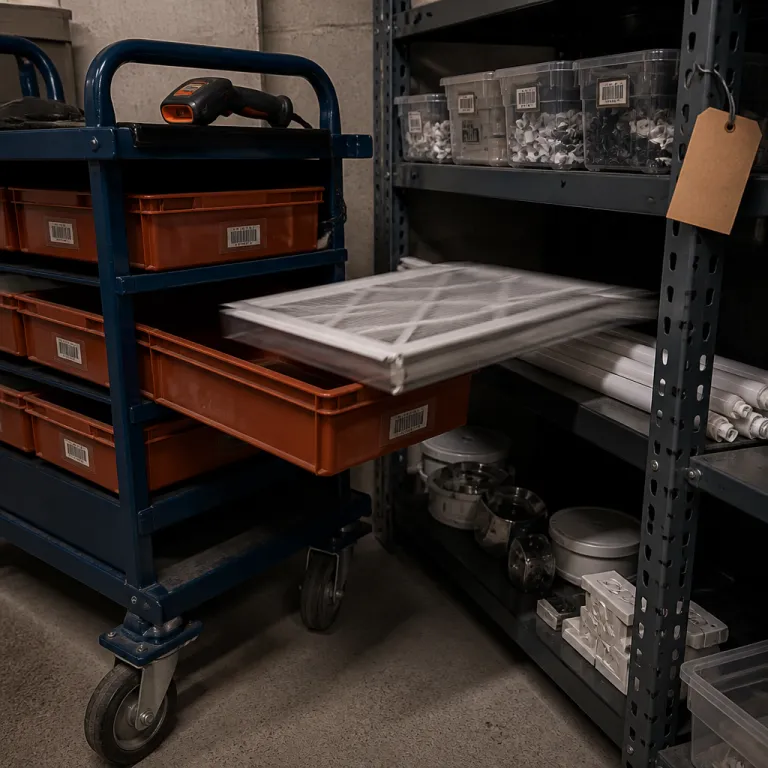
CMMS inventory management for New Zealand office managers
Why CMMS inventory management matters for New Zealand office managers
Office managers in New Zealand juggle inventory, maintenance, and compliance daily. Effective CMMS inventory management turns that pressure into a structured management system that keeps equipment reliable and stock under control. With the right maintenance software, you can align day-to-day operations with business goals instead of constantly reacting to breakdowns.
In many Wellington and Auckland offices, printers, HVAC equipment, and security systems share the same problem: no one has clear data on spare parts, stock levels, or preventive maintenance schedules. A modern CMMS (computerised maintenance management system) centralises every work order, asset record, and inventory item so you can manage inventory in real time rather than relying on scattered spreadsheets. This shift in CMMS practice reduces downtime, stabilises stock levels, and gives maintenance teams a single source of truth.
For office environments, maintenance management is not just about plant rooms and lifts. It is about protecting every asset that keeps people productive, from ergonomic chairs to meeting room AV equipment and backup power systems. When inventory management is embedded into CMMS software, you can link parts and items directly to each asset, track costs per work order, and see how stock levels affect overall operations.
Connecting inventory, assets, and equipment in one integrated system
Most New Zealand companies still separate inventory management from asset management, which creates blind spots. A unified CMMS inventory management approach links every asset to the right spare parts, maintenance history, and work orders in a single system. This integration lets office managers see how inventory levels influence downtime, costs, and maintenance operations across multiple sites.
Consider a Christchurch office with critical IT equipment, UPS units, and building management systems that all require preventive maintenance. If the CMMS software knows which items and parts belong to each asset, it can automatically reserve stock when a work order is created and alert you when stock levels fall below safe thresholds. That kind of real time tracking prevents situations where maintenance teams arrive on site but cannot complete the work because the correct spare parts are missing from inventory.
Remote monitoring tools are increasingly linked to management systems that handle both maintenance and inventory. When sensors detect abnormal equipment behaviour, they can trigger preventive maintenance tasks in the CMMS and check whether the necessary parts are available in stock before scheduling a technician. To understand how this fits into broader digital office strategies, many managers review guidance on remote equipment monitoring for office operations, then align their management system and inventory processes accordingly.
From reactive fixes to preventive maintenance and lower downtime
Unplanned downtime in New Zealand offices rarely makes headlines, yet it quietly erodes productivity. When lifts fail, access control systems freeze, or meeting room screens die, staff lose time and maintenance teams scramble for parts. CMMS inventory management gives you the data and structure to move from emergency repairs to disciplined preventive maintenance.
In a strong CMMS setup, every asset has a preventive maintenance plan linked to specific items and spare parts in inventory. The CMMS software automatically generates work orders at defined time intervals or usage levels, checks stock levels, and reserves the necessary parts before technicians arrive. This approach reduces the risk of cancelled work due to missing inventory and helps you track costs per asset, per work order, and per maintenance cycle.
Government expectations around automation and digital reporting are also reshaping how New Zealand offices handle maintenance management. Office managers who study the implications of the automation mandate for private offices quickly see that real time data on equipment, inventory levels, and maintenance operations will become a basic requirement. A mature management system that unites inventory management, asset management, and maintenance operations positions your organisation ahead of these regulatory and market shifts.
Real time data, tracking, and cost control for office operations
For an office manager, the real value of CMMS inventory management lies in visibility. Real time tracking of inventory, work orders, and equipment status lets you move from guesswork to evidence based decisions. When your management software provides clear dashboards, you can justify budgets, negotiate contracts, and optimise stock levels with confidence.
In practice, this means every movement of items and parts is recorded in the system, from receiving spare parts into stock to issuing them against a specific work order. Over several months, the CMMS software builds a detailed data trail that shows which assets consume the most inventory, which maintenance teams close work orders fastest, and where downtime is concentrated. With that information, you can adjust preventive maintenance plans, refine inventory levels, and reduce unnecessary costs without compromising service quality.
Real time reporting also strengthens your position in discussions with finance and senior management. When you can show how better inventory management has reduced emergency call outs, shortened downtime, and extended asset life, the ROI of the management system becomes clear. For broader strategic planning, many New Zealand office managers pair these insights with advanced site selection and market analysis, often using resources such as advanced site selection analysis methods to align facilities, supply chain partners, and maintenance operations.
Aligning inventory and supply chain with New Zealand realities
New Zealand’s geography and supply chain constraints make CMMS inventory management especially critical. Long lead times for imported equipment and spare parts mean that stock levels cannot be left to intuition or last minute orders. A robust management system helps office managers balance inventory costs against the risk of extended downtime when parts are unavailable.
For example, a large office in Hamilton relying on imported HVAC components must plan preventive maintenance and inventory management months ahead. By using CMMS software to analyse historical work orders, failure patterns, and supplier lead times, you can set minimum and maximum inventory levels that reflect real world risks. This data driven approach to asset management and maintenance management reduces urgent airfreight costs and keeps maintenance operations predictable even when the global supply chain is under pressure.
Local suppliers and service partners also benefit when your management software and management systems are well structured. Clear work orders, accurate parts lists, and transparent stock information reduce errors and rework for maintenance teams and contractors. Over time, this collaborative use of CMMS inventory data strengthens supplier relationships, stabilises costs, and supports more resilient operations across your New Zealand office network.
Practical steps to implement CMMS inventory management in your office
Transitioning to integrated CMMS inventory management does not have to overwhelm your équipe. Start by mapping your critical assets, key equipment, and the parts that most often cause downtime when they fail. Then configure your management software so that every work order, item, and asset record is linked to the correct inventory location and supplier.
Next, work with maintenance teams to define realistic preventive maintenance schedules for each asset category, from building systems to IT infrastructure and office furniture. Use the CMMS software to generate recurring work orders, attach checklists, and specify which spare parts and items are required for each task. As data accumulates, review failure rates, stock levels, and costs to refine your inventory management rules and CMMS settings.
Finally, treat the management system as a living tool rather than a one off project. Train new staff on how to manage inventory correctly, ensure that every completed work order includes accurate parts usage, and regularly audit data quality. Over time, this disciplined approach to CMMS inventory, asset management, and maintenance operations will give your organisation a measurable advantage in reliability, cost control, and operational resilience.
Key statistics on CMMS inventory management and office maintenance
- According to a global survey by Plant Engineering ("2017 Maintenance Study," published 2017, available from Plant Engineering’s research archive), organisations that adopt structured preventive maintenance programmes report up to 50% less unplanned downtime compared with those relying mainly on reactive work, highlighting the financial impact of linking preventive maintenance to accurate inventory levels.
- Research from Deloitte ("The Digital Industrial Transformation," 2016, accessible via Deloitte’s insights library) shows that companies using integrated asset management and maintenance management systems can reduce maintenance costs by 5 to 15%, largely through better tracking of spare parts, optimised stock levels, and fewer emergency call outs.
- A study by McKinsey & Company ("Risk, resilience, and rebalancing in global value chains," 2020, published on McKinsey’s knowledge portal) on supply chain resilience found that businesses with real time visibility into inventory and equipment status recover from major disruptions up to 40% faster, underlining the value of CMMS software that unites inventory management and maintenance operations.
- Data from the International Facility Management Association (IFMA) ("Operations and Maintenance Benchmarks," 2017, available through IFMA’s benchmarking reports) indicates that maintenance teams typically spend 10 to 25% of their time searching for tools, parts, or information, suggesting that a well configured management system with clear work orders and inventory data can release significant productive time.
FAQ about CMMS inventory management for New Zealand offices
How does CMMS inventory management differ from a basic stock spreadsheet ?
A basic spreadsheet records items and quantities, but CMMS inventory management links inventory directly to assets, work orders, and maintenance schedules in a central system. This connection lets you track real time stock levels, reserve parts for specific jobs, and analyse costs per asset or per maintenance activity. It also reduces errors because maintenance teams update parts usage as they complete work, keeping data accurate without manual reconciliation.
What types of office equipment benefit most from a CMMS with inventory features ?
Any equipment where downtime disrupts daily work benefits from CMMS software that includes inventory management. In New Zealand offices, this often includes HVAC systems, lifts, access control, fire protection, server room infrastructure, and meeting room AV equipment. When these assets are tied to specific spare parts and preventive maintenance plans in the management system, failures become less frequent and repairs are faster.
How can office managers justify the cost of a management system to leadership ?
Office managers can use data from pilot sites to show how CMMS inventory management reduces emergency call outs, shortens downtime, and lowers express freight costs for urgent parts. By tracking work orders, stock levels, and asset performance before and after implementation, you can present clear ROI figures to finance and executives. Many organisations also highlight compliance, safety, and resilience benefits, which are increasingly important in New Zealand’s regulatory environment.
What is the best way to start managing inventory in a CMMS ?
The most effective starting point is to focus on critical assets and the spare parts that cause the longest delays when unavailable. Load these items into the CMMS with accurate descriptions, supplier details, and minimum stock levels, then link them to relevant assets and preventive maintenance tasks. As maintenance teams use the system and complete work orders, you can expand coverage to less critical items and refine inventory rules based on real time data.
How does CMMS inventory management support collaboration with external maintenance teams ?
When external maintenance teams receive work orders from your management software, they see exactly which parts are required, where items are stored, and what asset history exists. This clarity reduces site visits, misdiagnosis, and repeated trips due to missing inventory. Over time, shared use of the management system builds trust, improves service quality, and stabilises maintenance operations across all your New Zealand office locations.
