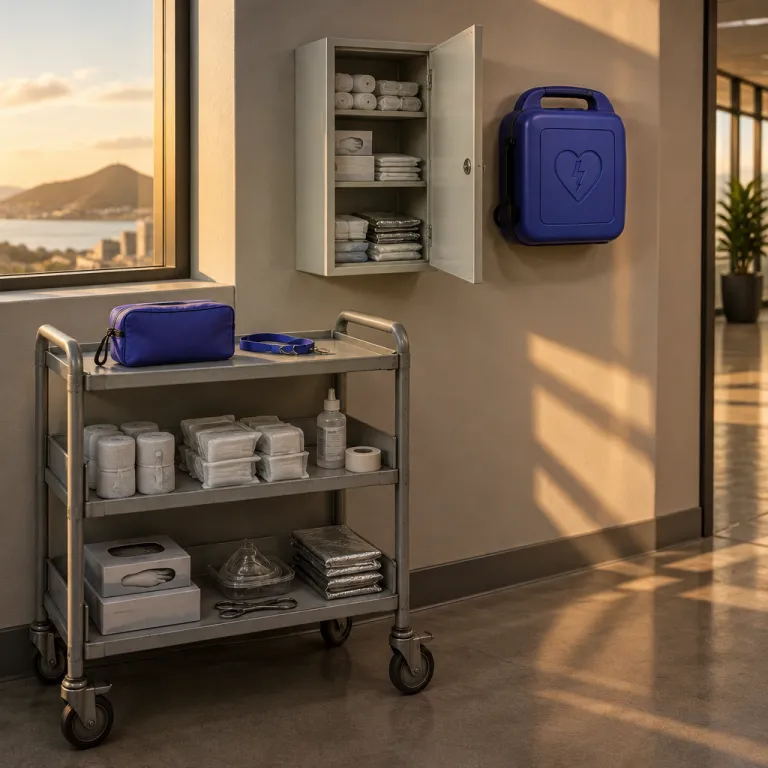
Section 1 – Why workplace first aid in NZ is a needs assessment, not a green box
Most New Zealand offices treat workplace first aid as a compliance ornament. Your real obligation under WorkSafe guidance is to match first aid arrangements to the actual nature of work and the real risks in your building. If an emergency happens, the question will be whether you could reasonably provide first aid, not whether a poster was on the wall.
WorkSafe’s good practice guidance on workplace first aid requirements in NZ is built around a first aid needs assessment, not a fixed ratio of first aiders to workers. You look at headcount, layout, the type of work, known health conditions, and how quickly emergency services can reach your location, then you size your first aid equipment and facilities from there. That assessment becomes your baseline for aid requirements, aid kits, trained first aiders, and any dedicated aid room or shared equipment facilities.
For an office manager in Auckland, Wellington, or Christchurch, the lazy option is to buy one generic aid kit and hope. A serious approach to workplace first aid requirements in NZ means mapping each floor, each team, and each high risk area such as workshops, server rooms, or loading docks, then deciding where to provide first aid equipment and where to position trained first aiders. That is how you turn a dusty first aid kit into a functioning health safety system that actually supports workers.
Think of your first aid plan as part of overall health and safety work, not a separate box tick. The same governance discipline you apply to payroll, procurement, and IT access should apply to first aid equipment, aid courses, and refresher training. When WorkSafe asks for evidence, they want to see a documented workplace first aid needs assessment, not a receipt for two aid kits bought on special.
Section 2 – Building a WorkSafe style first aid needs assessment for your office
Start your workplace first aid requirements in NZ assessment with a simple matrix. Down one side list locations, from open plan floors to meeting rooms, kitchens, car parks, and any isolated work areas, then across the top list headcount, tasks, and specific risks. This lets you see where first aid equipment, trained first aiders, and better safety work practices are actually needed.
For each location, ask three blunt questions about first aid and health safety. First, what is the nature of work here, including any manual handling, visitor traffic, or high risk activities such as on site client events with alcohol, then second, how long would emergency services realistically take to reach this location during peak traffic, and third, what existing equipment facilities such as defibrillators, wheelchairs, or spill kits are already in place. Your answers drive how many aiders you must train, what type of aid kit or aid kits you must provide, and whether you need a dedicated aid room or just well signposted cupboards.
WorkSafe expects you to consider workers who are not always visible. That means factoring in contractors, cleaners, and lone workers who might be in the workplace after hours when no trained first aider is on site, and it also means checking whether your first aid equipment is accessible to mobility impaired staff. A good example first scenario is a small Wellington tech firm with thirty workers across two floors, where the office manager designates one first aider per floor, installs two wall mounted aid kits near the kitchens, and documents how to provide first aid until emergency services arrive.
Do not forget the policy plumbing behind the physical first aid equipment. Your first aid needs assessment should sit alongside other compliance frameworks such as your leave and payroll rules, especially where incidents may trigger sick leave or ACC claims, so it is worth aligning your first aid governance with any internal guidance you already use to interpret the Employment Relations Act and the Holidays Act, or external commentary such as this analysis of how the Employment Leave Act can reshape your payroll runway and parental leave sequencing: employment leave and payroll runway obligations. When your health safety, payroll, and HR records talk to each other, you can show WorkSafe a coherent story about how you manage risks and support injured workers.
Section 3 – Scaling first aiders, kits, and equipment with headcount and layout
Once the assessment is done, you translate it into numbers. The workplace first aid requirements in NZ do not give a single mandatory ratio, but WorkSafe’s guidance and most reputable aid courses providers in New Zealand suggest that more complex layouts and higher risks demand more first aiders and more aid kits. Your job is to justify your numbers in writing, not guess.
In a compact twenty person office on one level in central Auckland, you might reasonably provide first aid coverage by training two first aiders and placing one comprehensive aid kit in a central location. Shift that same équipe into a split level office with secure doors between teams, and you probably need at least one trained first aider per zone, with separate aid kits and clear signage so workers can reach aid equipment without swiping through multiple doors. The principle is simple, but the execution requires you to walk the floor and test how long it takes to reach a first aid kit from each workstation.
Do not ignore shared or ambiguous spaces when planning workplace first aid requirements in NZ. Kitchens, reception areas, and meeting rooms host visitors who are not familiar with your health safety procedures, so they are prime candidates for visible first aid equipment and quick access to a first aider, and they are also where slips, burns, and allergic reactions often occur. A practical example first scenario is a Christchurch professional services firm that positions an aid kit at reception, trains the receptionist as a first aider, and documents how to provide first aid to clients while waiting for emergency services.
As your headcount grows past fifty workers, you should treat first aid as a small operational system, not a one off purchase. That means maintaining an inventory of aid kits, tracking expiry dates for items like saline and burn dressings, and scheduling aid courses and refresher sessions with providers such as St John or Red Cross, and it also means recording which first aiders are confident to handle high risk scenarios such as anaphylaxis or cardiac arrest. When someone leaves, your offboarding checklist should include removing them from the first aider register and planning to provide first aid coverage by training a replacement, just as you would adjust HR processes after analysing exit interview questions that surface real problems in Kiwi workplaces: exit interview questions for New Zealand offices.
Section 4 – Training, recertification, and the mental health first aid gap
Training is where many New Zealand offices quietly fall out of alignment with workplace first aid requirements in NZ. You send a keen staff member on a first aid course once, then three years later their certificate has lapsed, they have changed teams, and nobody updates the emergency contact list. WorkSafe’s expectation is that first aiders remain competent, not just historically trained.
Most mainstream aid courses in New Zealand issue certificates with a recommended refresher cycle, and providers such as St John and Red Cross typically suggest refreshers every two years and full recertification after a longer period, so your health safety calendar should treat those dates as non negotiable. Build a simple register that lists each first aider, their course date, the type of training completed, and the expiry date, then set reminders in your calendar or HR system so you can provide first aid refresher bookings before coverage lapses. This is the operational discipline that separates a compliant workplace first aid system from a paper only policy.
Office managers are also facing a new frontier in workplace first aid requirements in NZ. Mental health first aid is not yet mandated in the same way as physical first aid, but many New Zealand employers now expect at least some workers to be trained first responders for psychological distress, and WorkSafe’s broader focus on psychosocial risks makes this hard to ignore. A practical example first step is to nominate one or two staff in each location to attend a recognised mental health first aid course, then integrate those roles into your emergency and wellbeing plans.
When you design training, think about the nature of work and the specific risks your équipe faces. A contact centre with high emotional load may need more mental health first aiders, while a field heavy engineering firm will prioritise physical trauma skills, yet both still sit under the same health safety governance. Either way, your training plan should provide first aid coverage across all shifts, including after hours work, and it should be documented alongside other governance artefacts such as your written information security plan, which you can structure using frameworks like those discussed in this guide to why every New Zealand office needs a written information security plan: written information security plan for New Zealand offices.
Section 5 – Records, signage, lone workers, and after hours blind spots
When something goes wrong, your paperwork becomes evidence. WorkSafe and insurers will look at whether your workplace first aid requirements in NZ were translated into real systems, not just whether you had a policy on the intranet. That means records, signage, and practical arrangements for people who work alone or outside normal hours.
At a minimum, you should maintain a first aid register that records every incident where first aid equipment or an aid kit is used, including the date, time, location, nature of work involved, and which first aider responded. This log helps you spot patterns such as repeated minor injuries in one area, which may signal underlying safety work issues or unaddressed risks, and it also shows WorkSafe that you are providing first aid in a structured way. Pair that with clear signage that shows where aid kits, defibrillators, and any aid room or shared equipment facilities are located, and make sure new workers see this during induction.
Lone workers and after hours staff are the classic blind spot in workplace first aid requirements in NZ. Cleaners, security guards, and staff who prefer late night work may have no trained first aider on site, no easy access to an aid kit, and slower response times from emergency services, especially in industrial zones on the edge of Auckland or Christchurch. Your needs assessment must explicitly address these scenarios, for example first by providing first aid equipment in secure but accessible locations, second by training contractors in basic first aid procedures, and third by ensuring reliable communication channels to call for help.
For multi site organisations, consistency matters. A Wellington head office with strong health safety systems is not much use if a small satellite workplace in Tauranga has no first aiders, outdated aid kits, and no clear process for providing first aid when someone is injured, so your governance should extend across all locations. Treat first aid as part of your overall risk management portfolio, alongside information security, HR compliance, and facilities maintenance, and review it with the same regularity as your other operational audits.
Section 6 – High risk pockets inside low risk offices, and what “good” looks like
Many office managers assume that a white collar workplace is automatically low risk. In reality, workplace first aid requirements in NZ recognise that even apparently safe offices can contain high risk pockets where the likelihood or impact of injury is much higher. Your job is to find those pockets and match first aid equipment, aiders, and procedures to them.
Look for areas where the nature of work departs from standard desk activity. Server rooms with raised floors and heavy equipment, workshops for product teams, storage rooms with ladders, and loading bays for courier work all introduce extra risks that demand more robust first aid arrangements, and kitchens with hot surfaces and sharp tools are another classic example first scenario. In these spaces, you may need specialised aid kits such as burn kits, eye wash stations, or additional aid equipment like automated external defibrillators, and you should ensure that at least one trained first aider is routinely present when the area is in use.
Good practice for workplace first aid requirements in NZ also means integrating first aid into your broader emergency planning. Fire wardens and first aiders should know each other by name, understand who leads in different types of emergency, and rehearse how to provide first aid while coordinating with emergency services, and your drills should include realistic scenarios such as a worker collapsing in a stairwell or a contractor injured in the car park. When you can walk through those scenarios and show that your health safety systems, aid kits, and trained first aiders all work together, you are close to what WorkSafe expects.
Ultimately, first aid in a New Zealand office is not about the colour of the box. It is about whether workers can access appropriate first aid equipment and competent first aiders quickly, whether records and signage support that response, and whether your systems hold up when someone is actually hurt. The test is not the policy PDF, but the Monday morning queue at reception.
Key figures on workplace first aid in New Zealand offices
- WorkSafe New Zealand’s guidance on workplace first aid emphasises a needs based assessment rather than fixed ratios, meaning each employer must evaluate headcount, layout, and risks to determine appropriate first aid coverage, which places more responsibility on office managers to document their reasoning.
- Major New Zealand first aid training providers such as St John and Red Cross typically recommend refresher training every two years for workplace first aiders, which implies that up to half of nominal first aiders in a business may be out of date at any given time if no tracking system exists.
- Automated external defibrillators have been shown in international studies to increase survival rates for sudden cardiac arrest in workplaces when used within the first few minutes, which is why many New Zealand offices now treat defibrillators as core first aid equipment rather than optional extras.
- Psychosocial risks, including work related stress and fatigue, are explicitly recognised in modern health and safety frameworks, which is driving growing adoption of mental health first aid training alongside traditional physical first aid courses in New Zealand workplaces.
- Multi storey offices and multi site organisations face longer internal response times to incidents, so they often require more first aiders and more distributed aid kits than single level workplaces with the same headcount, which reinforces the importance of location specific needs assessments.
FAQ – workplace first aid requirements in NZ
How many first aiders does my New Zealand office legally need?
New Zealand law does not set a single mandatory ratio of first aiders to workers, and WorkSafe instead expects you to complete a first aid needs assessment that considers headcount, layout, risks, and access to emergency services. Many offices adopt at least one trained first aider for every twenty to fifty workers per floor as a practical benchmark, then adjust up for high risk areas or complex layouts.
What should be in a standard office first aid kit in NZ?
A typical office first aid kit in New Zealand should include basic wound dressings, bandages, adhesive plasters, antiseptic wipes, gloves, resuscitation masks, and eye wash, and higher risk areas may need burn dressings or additional items. The exact contents should be based on your workplace first aid needs assessment and checked regularly for expiry dates and completeness.
How often should workplace first aid training be refreshed?
Most New Zealand first aid training providers recommend refresher courses every two years to keep skills current, with full recertification required after a longer period specified on the certificate. Office managers should track training dates for all first aiders and schedule refreshers before certificates lapse to maintain continuous coverage.
Do I need mental health first aiders in a low risk office?
While not yet a strict legal requirement, mental health first aiders are increasingly seen as good practice in New Zealand workplaces, including low risk offices. They help workers respond appropriately to colleagues in distress and support broader obligations to manage psychosocial risks under health and safety law.
How should I manage first aid for lone workers and after hours staff?
For lone workers and after hours staff, your needs assessment should address access to first aid kits, communication methods to call for help, and whether those workers need basic first aid training themselves. Clear procedures, reliable communication tools, and strategically placed first aid equipment are essential to compensate for the absence of other staff.